GSM stands for grams per square metre. It is the weight of one square metre of fabric, and it is the quickest way to compare how heavy, thick and structured a garment will feel. In streetwear, GSM is often the first thing buyers ask about, because weight is a big part of the premium feel.
T-shirt weights
| GSM | Feel | Typical use |
|---|---|---|
| 140-170 | Light, soft, drapes close to the body | Basics, promotional tees, layering |
| 180-220 | Midweight, everyday quality | Most fashion tees and graphic tees |
| 230-300 | Heavy, structured, holds its shape | Boxy and oversized streetwear tees |
Heavier jersey gives that boxy silhouette and a flat, stable surface for large prints. It also costs more per piece and can feel warm in summer, so many brands offer one heavyweight tee and one midweight tee.
Hoodie and sweatshirt weights
| GSM | Feel | Typical use |
|---|---|---|
| 260-320 | Mid-weight, flexible | Zip hoodies, layering pieces, warmer climates |
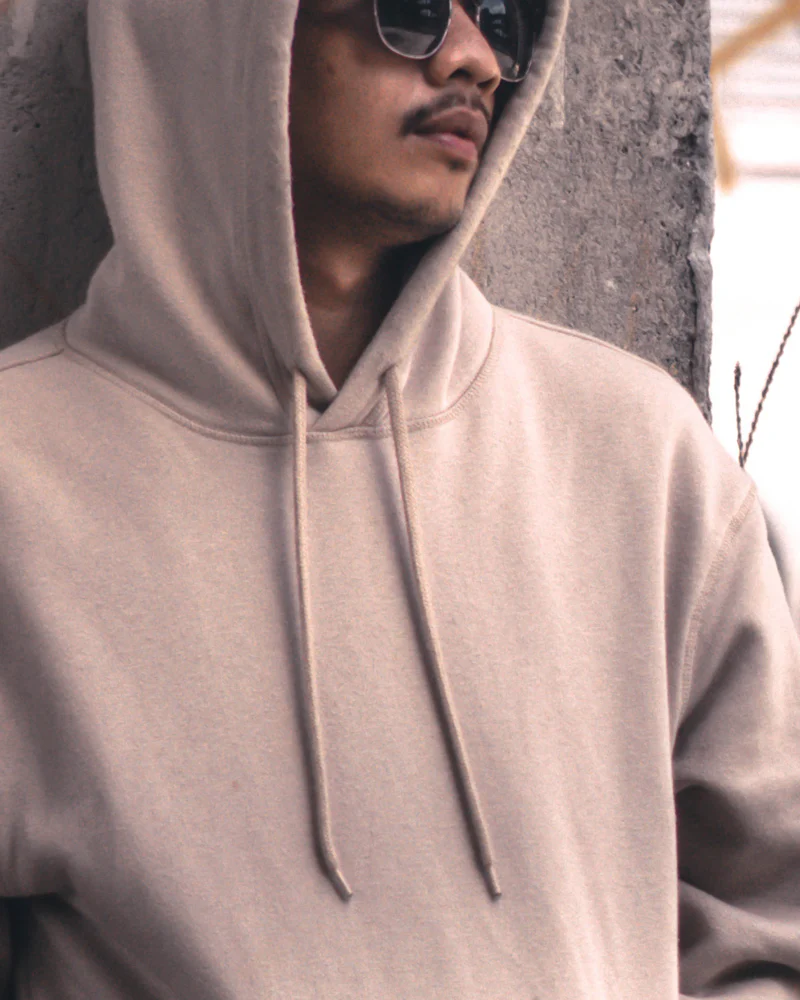
| 330-380 | Heavy, warm, good structure | Core streetwear hoodies |
| 400+ | Very heavy, stiff at first, premium | Statement oversized hoodies |
Fleece or French terry?
Both are knitted with loops on the inside. In French terry the loops are left as they are, so it breathes better and has a cleaner, slightly textured inside. In brushed fleece the loops are brushed into a soft, fluffy surface that feels warmer. The same GSM can feel quite different depending on which one you choose, so always compare samples.
Weight is not the only quality signal
- Yarn: combed and ring-spun cotton feels smoother and pills less than open-end yarn at the same weight.
- Composition: a little polyester (for example 80/20) helps shape and reduces shrinkage; 100% cotton feels more natural and takes garment dye better.
- Finishing: pre-shrinking, enzyme washing and garment dyeing change the hand feel and can also change the final weight slightly.
How GSM affects decoration
Heavier fabrics carry dense embroidery and puff print without puckering, and they give screen prints a crisp base. Very light fabrics may need backing for embroidery and are better suited to soft-hand prints. If your design is decoration-heavy, mention it when you choose fabric weight.
A simple way to decide
- Pick the look: boxy and structured, or soft and drapey.
- Think about your customers' climate and season.
- Match the weight to your decoration.
- Order samples in two weights and wear them for a week.
Our catalogue lists the fabric and GSM of every core style. If you need a different weight, ask for it in your quote request.