The way your logo or graphic is applied changes how the garment looks, feels, lasts and costs. Choosing the right method early saves sampling rounds and keeps your unit price where you want it. Here is how the main methods compare.
Screen printing
Ink is pushed through a mesh screen, one screen per colour. It produces bold, opaque, durable prints with a smooth finish.
- Best for: graphics with a limited number of solid colours, medium and larger runs.
- Watch out for: each colour needs its own screen and setup, so many colours on a small run gets expensive. Photographic detail and gradients are harder.
Puff print
A screen print with an additive that rises when heat-cured, giving a raised, rubbery, three-dimensional effect. It is a streetwear favourite for chest logos and bold lettering.
- Best for: simple, bold shapes and thick lines.
- Watch out for: fine detail and small text can fill in. It works best on heavier fabrics.
DTF (direct to film)
The design is printed onto a film with full-colour inks and an adhesive powder, then heat-pressed onto the garment.
- Best for: full-colour artwork, gradients and small quantities, because there are no screens to set up.
- Watch out for: large solid areas can feel like a layer on top of the fabric. Wash durability depends on good materials and correct pressing, so test it on your sample.
Embroidery
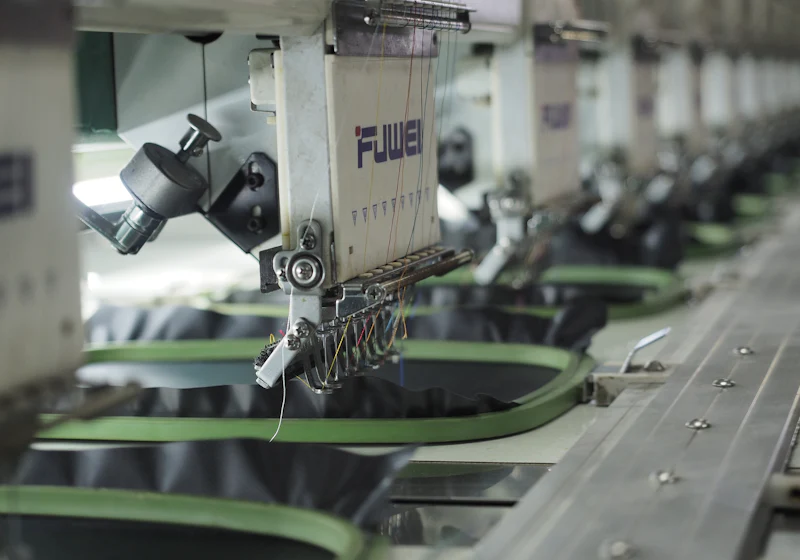
Thread is stitched directly into the fabric. It looks premium, lasts as long as the garment and adds texture. Variants include flat embroidery, 3D puff embroidery (stitched over foam) and chenille, the fluffy look of varsity patches.
- Best for: logos, small chest marks, caps and premium pieces.
- Watch out for: price depends on stitch count, so large designs cost more. Very small text and fine lines lose detail, and light fabrics may pucker without backing.
Sublimation
Dye is turned into gas with heat and bonded into polyester fibres. The print becomes part of the fabric, with no feel at all.
- Best for: all-over prints and sportswear on polyester fabrics, such as tricot tracksuit tape.
- Watch out for: it does not work on cotton, and only on light-coloured polyester.
Side-by-side
| Method | Look | Detail | Small runs | Fabrics |
|---|---|---|---|---|
| Screen print | Bold, smooth | Good | Fewer colours best | Cotton, blends |
| Puff print | Raised, 3D | Low | Fewer colours best | Mid to heavy cotton |
| DTF | Full colour | Very good | Very good | Most fabrics |
| Embroidery | Textured, premium | Medium | Good | Most, with backing |
| Sublimation | No feel, all-over | Very good | Good | Light polyester only |
Mixing methods
Many of the best streetwear pieces combine methods: an embroidered chest logo with a large screen print on the back, or a puff print with a woven label and a printed neck tag. Combining methods adds setup steps, so plan it at the sampling stage.
Not sure which method suits your artwork? Send it with your quote request and we will recommend the best option for your design, fabric and quantity.